Winning the FIFA World Cup remains the single hardest achievement in the sport, a prize contested every four years and claimed by only a tiny group of nations across nearly a century of football. Since the first tournament in 1930, the competition has grown from a modest gathering in Uruguay into the most-watched sporting event on the planet.
What gives the trophy its weight is its scarcity. Generations of gifted players retire without ever lifting it, and entire footballing cultures have been defined by a single summer. From Brazil’s flair to Germany’s machinery and Italy’s defensive mastery, each champion tells a story about its era. As of 2022, just eight countries have ever been crowned world champions.
FIFA World Cup Winners List by Year
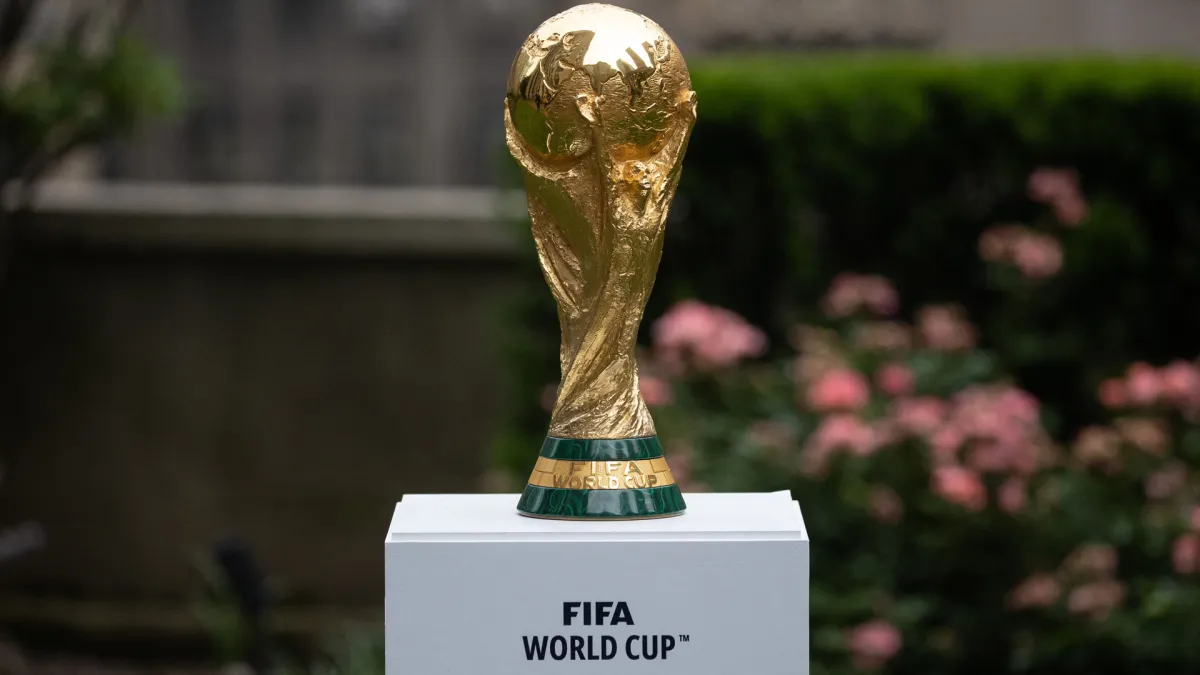
The World Cup has been staged every four years since 1930, pausing only for the Second World War, and its champions stretch across every major footballing era from the black-and-white age to the modern game.
| Year | Host Nation | Winner | Runner-Up | Final Score |
|---|---|---|---|---|
| 1930 | Uruguay | Uruguay | Argentina | 4–2 |
| 1934 | Italy | Italy | Czechoslovakia | 2–1 (a.e.t.) |
| 1938 | France | Italy | Hungary | 4–2 |
| 1950 | Brazil | Uruguay | Brazil | 2–1 |
| 1954 | Switzerland | West Germany | Hungary | 3–2 |
| 1958 | Sweden | Brazil | Sweden | 5–2 |
| 1962 | Chile | Brazil | Czechoslovakia | 3–1 |
| 1966 | England | England | West Germany | 4–2 (a.e.t.) |
| 1970 | Mexico | Brazil | Italy | 4–1 |
| 1974 | West Germany | West Germany | Netherlands | 2–1 |
| 1978 | Argentina | Argentina | Netherlands | 3–1 (a.e.t.) |
| 1982 | Spain | Italy | West Germany | 3–1 |
| 1986 | Mexico | Argentina | West Germany | 3–2 |
| 1990 | Italy | West Germany | Argentina | 1–0 |
| 1994 | United States | Brazil | Italy | 0–0 (3–2 pen.) |
| 1998 | France | France | Brazil | 3–0 |
| 2002 | South Korea/Japan | Brazil | Germany | 2–0 |
| 2006 | Germany | Italy | France | 1–1 (5–3 pen.) |
| 2010 | South Africa | Spain | Netherlands | 1–0 (a.e.t.) |
| 2014 | Brazil | Germany | Argentina | 1–0 (a.e.t.) |
| 2018 | Russia | France | Croatia | 4–2 |
| 2022 | Qatar | Argentina | France | 3–3 (4–2 pen.) |
Most Successful FIFA World Cup Nations
A small handful of countries have shaped the tournament’s history. Brazil stand alone with five titles and a record for consistency, while Germany and Italy built dynasties through different philosophies. Argentina’s three triumphs span the Maradona and Messi eras, and France emerged as the dominant modern force with two titles in two decades.
| Nation | Titles | Winning Years |
|---|---|---|
| Brazil | 5 | 1958, 1962, 1970, 1994, 2002 |
| Germany | 4 | 1954, 1974, 1990, 2014 |
| Italy | 4 | 1934, 1938, 1982, 2006 |
| Argentina | 3 | 1978, 1986, 2022 |
| France | 2 | 1998, 2018 |
| Uruguay | 2 | 1930, 1950 |
| England | 1 | 1966 |
| Spain | 1 | 2010 |
Every FIFA World Cup Champion Explained
Here is the FIFA World Cup Winners List.
Brazil World Cup Titles
Brazil’s five titles are the benchmark every other nation chases. The Pelé-inspired sides of 1958 and 1970 redefined attacking football, the latter widely regarded as the greatest team ever, and the 1994 and 2002 victories proved their enduring pedigree across eras.
Germany World Cup Titles
Spanning the West Germany and unified Germany eras, the Germans are a model of consistency, reaching more finals than anyone. Their 2014 triumph in Brazil, sealed by Mario Götze’s extra-time strike, capped a long-term rebuild rooted in youth development.
Italy World Cup Titles
Italy’s success was built on defensive intelligence and tournament savvy. After back-to-back wins in the 1930s under Vittorio Pozzo, Paolo Rossi inspired the 1982 title and a battle-hardened side claimed 2006 in Berlin on penalties.
Argentina World Cup Titles
Argentina’s history is bound to its icons. Diego Maradona dragged the team to glory in 1986, and 36 years later Lionel Messi finally completed his legacy in 2022, beating France in one of the most dramatic finals the sport has seen.
France World Cup Titles
France announced themselves with a commanding home triumph in 1998, led by Zinedine Zidane. Twenty years on, a young, fast and fearless 2018 generation under Didier Deschamps confirmed the country as a modern superpower.
Uruguay World Cup Titles
The first world champions in 1930, Uruguay also won on Brazilian soil in 1950 in the famous Maracanazo. For a nation of its size, two titles remain an extraordinary mark of its early dominance.
England World Cup Titles
England’s lone triumph came at Wembley in 1966, with Geoff Hurst’s hat-trick in the final against West Germany. It remains the defining moment of English football and a benchmark every subsequent generation has been measured against.
Spain World Cup Titles
Spain’s 2010 victory in South Africa was the crowning achievement of the tiki-taka era, a possession-based style that conquered the world. It was the country’s first and only title, bridging two European Championship wins.
Memorable FIFA World Cup Finals
Across the decades, the final has produced moments that live forever in football’s collective memory.
- Uruguay vs Argentina (1930): the very first World Cup final, with hosts Uruguay fighting back to win 4–2.
- England vs West Germany (1966): Geoff Hurst’s extra-time hat-trick gave England their only crown.
- Argentina vs West Germany (1986): the culmination of Maradona’s tournament, Argentina holding on 3–2.
- Brazil vs Italy (1994): the first final settled on penalties, ending with Roberto Baggio’s famous miss.
- France vs Brazil (1998): Zidane’s two headers delivered France a 3–0 win on home soil.
- Germany vs Argentina (2014): Götze’s late strike decided a tense, goalless final in extra time.
- Argentina vs France (2022): Messi against Mbappé, a 3–3 thriller settled on penalties and hailed as one of the greatest finals ever.
Key FIFA World Cup Records
Across more than 90 years, the tournament has produced records that have stood the test of time.
| Record | Holder |
|---|---|
| Most Titles | Brazil (5) |
| Most Final Appearances | Germany (8) |
| Most World Cup Matches (team) | Brazil (114) |
| Most Goals in World Cup History | Miroslav Klose (16) |
| Most Matches Played (player) | Lionel Messi (26) |
| Youngest Final Goalscorer | Pelé (17 years, 249 days) |
| Oldest World Cup Player | Essam El-Hadary (45 years, 161 days) |
Why the FIFA World Cup Remains Football’s Ultimate Prize
To become world champions is to be written permanently into football history. Long after the players retire, entire generations are remembered through a single July afternoon, their names spoken with reverence across continents and decades.
No club honour carries the same global weight, because the World Cup unites nations and pauses the planet every four years. The roll call of just eight winners is a reminder of how rare the feat truly is, and why fans still celebrate these champions, and the stories behind their triumphs, as football’s most treasured legacy.